How thermoplastics, elastomers and specialist moulding feedstocks behave when shot sizes and components are small.
Micro injection moulding is not limited to one family of plastics. The correct material depends on the finished component, feature size, operating environment and the moulding equipment. At small scale, material preparation and flow behaviour become particularly important.
What Materials Can Be Used in Micro Injection Moulding?
Micro injection moulding can process different material families depending on the component, tooling and equipment being used. These can include common and engineering thermoplastics, thermoplastic elastomers, liquid silicone rubber and specialist moulding feedstocks.
Choosing a material requires consideration of its properties and how it behaves during the moulding process, particularly when producing small components or intricate features.
Thermoplastics for Micro Injection Moulding
Many common and engineering thermoplastics can be used for micro-moulded parts, subject to the material grade and application.
Examples may include:
- Polypropylene (PP)
- Polyethylene (PE)
- Acrylonitrile butadiene styrene (ABS)
- Polycarbonate (PC)
- Acetal (POM)
- Nylon (PA)
- Specialist high-performance polymers
The material data sheet should define the required drying conditions, processing temperature and mould conditions.
Why Is Material Drying Important?
Some thermoplastic grades are hygroscopic, meaning they absorb moisture. These materials require controlled drying before processing.
Even a small amount of moisture can affect the appearance or mechanical performance of a micro-moulded component.
Material preparation should therefore follow the requirements of the selected grade rather than relying on general processing settings.
Thermoplastic Elastomers for Micro-Moulded Components
Thermoplastic elastomers, often referred to as TPEs, can provide flexible, sealing or soft-touch features while processing in a broadly thermoplastic moulding cycle.
These materials can be considered where a component requires flexible properties or where an additional material is being moulded onto a rigid substrate.
Using Thermoplastic Elastomers for Overmoulding
When thermoplastic elastomers are used for overmoulding, their flow behaviour, shrinkage and adhesion to the rigid substrate must be checked.
Material compatibility and the component design are important when developing a reliable multi-material part.
For further information about combining different materials, read our guide to overmoulding and multi-material components.
Liquid Silicone Rubber for Micro Injection Moulding
Liquid silicone rubber (LSR) is another material used for small, detailed and flexible moulded components.
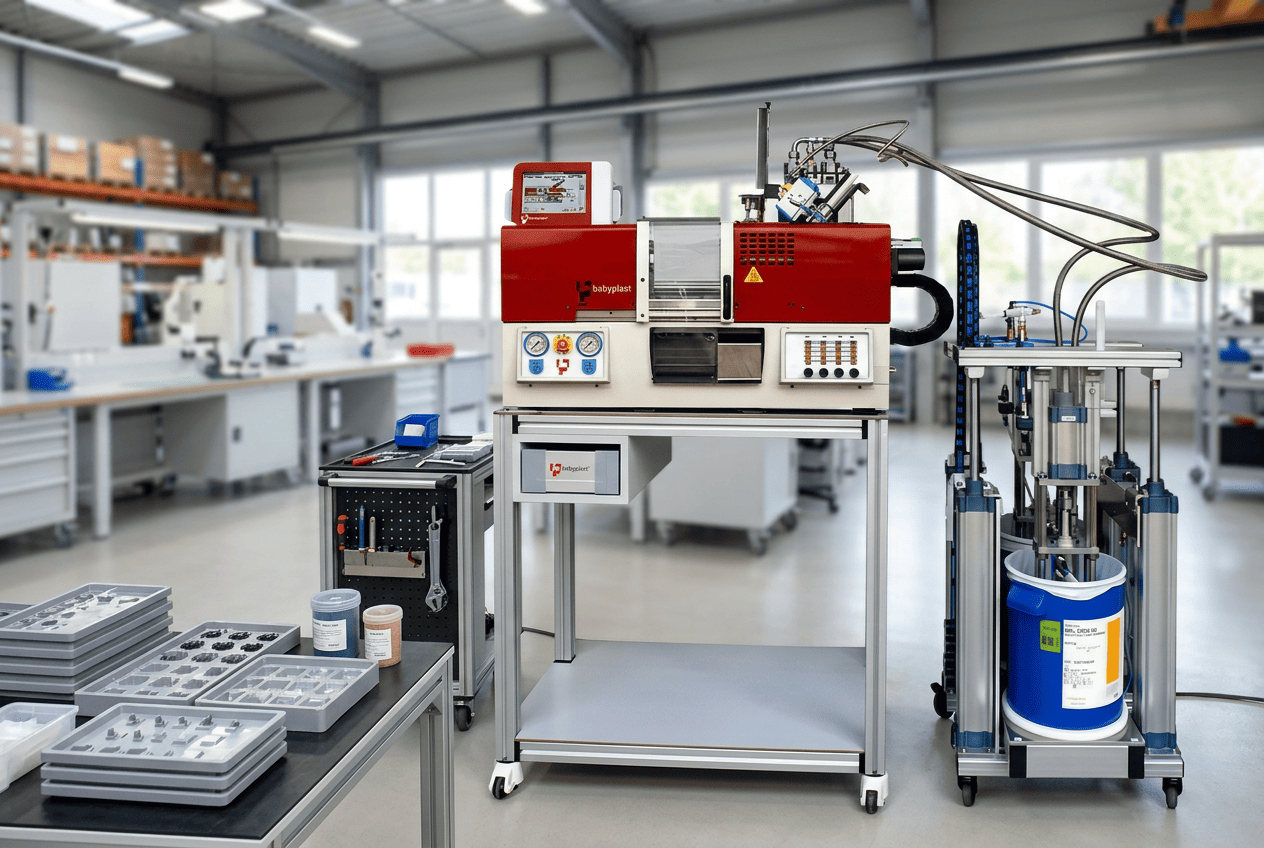
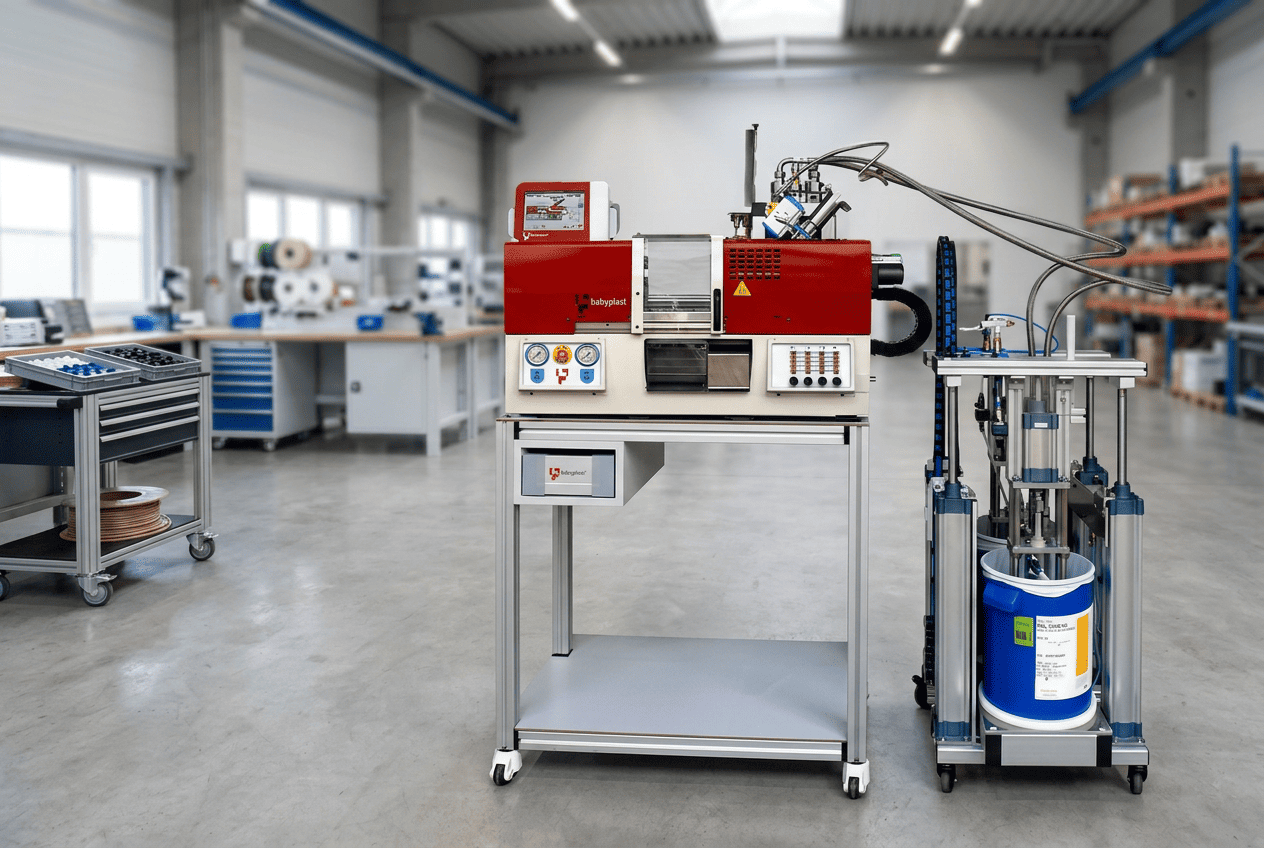
LSR is a two-part liquid material that cures in a heated mould. Unlike conventional thermoplastics, it requires dedicated dosing, mixing and injection equipment.
Liquid silicone rubber can be used for flexible seals, membranes and other detailed components where silicone properties are valuable.
Why Does LSR Require Specialist Equipment?
The two material components must be accurately dosed and mixed before injection. The material then cures within a heated mould rather than cooling in the way a thermoplastic component does.
Equipment selection and tooling must therefore account for these different processing requirements.
Learn more about the process in our guide to liquid silicone rubber injection moulding.
Ceramic and Metal Feedstocks in Micro Moulding
Some specialist micro-moulding applications use feedstocks containing ceramic or metal powder held within a polymer binder.
The moulding stage creates a green part, which normally requires controlled debinding and sintering afterwards.
Final dimensions depend on predictable shrinkage throughout the complete manufacturing process.
How Are Specialist Feedstocks Different from Plastic Moulding?
Ceramic and metal feedstock moulding involves additional processing stages beyond the initial moulding operation.
These are specialist processes and should not be treated as ordinary plastic moulding.
Feedstock supplier guidance, tool design and downstream processing capability are essential when assessing suitability.
What Material Properties Matter Most in Micro Injection Moulding?
When selecting micro injection moulding materials, the behaviour of the material during processing is just as important as the properties required in the finished component.
Important considerations include:
- Flow behaviour: The ability of the material to flow through small gates and thin sections.
- Thermal stability: The material’s stability during the required residence time.
- Moisture sensitivity: Drying requirements and the effect of moisture on processing.
- Dimensional stability: Shrinkage and the ability to maintain the required component dimensions.
- Filler content: Abrasiveness and potential wear on mould tooling.
- Mechanical properties: Required strength and flexibility.
- Operating conditions: Temperature resistance and any applicable regulatory performance requirements.
The relative importance of these factors depends on the component, material grade and intended application.
Why Do Shot Size and Residence Time Matter?
Micro injection moulding often involves very small shot volumes, making the relationship between the material and injection unit particularly important.
A machine should use an injection unit appropriate to the actual shot required by the component.
Processing a tiny component in an oversized barrel can increase material residence time and make the delivered volume more difficult to control.
Considering the Complete Shot Volume
The total material requirement should account for more than the finished component alone.
The runner, sprue and purge requirement should be considered alongside the part weight when assessing the process.
Correct injection unit sizing helps ensure that the material and equipment are matched to the intended application.
How Do You Choose the Right Micro Injection Moulding Material?
Material selection should be based on the component’s design, operating requirements and the capabilities of the proposed moulding equipment.
The component designer, material supplier, toolmaker and moulder should agree on the selected material and its processing requirements.
This helps ensure that the material grade, tool design and injection moulding process are considered together.
Confirming Material Suitability with Babyplast UK
Babyplast equipment is used across plastic, rubber and specialist micro-material applications.
Babyplast UK can review the material grade, shot volume and tool concept to assess the requirements of a particular component.
Where practical, a production trial can help confirm whether the proposed material and moulding arrangement are suitable.
Explore the Babyplast UK micro injection moulding applications to learn more about the different manufacturing processes and component requirements.