How machine size, shot control, tooling and production requirements change when components become very small.
Injection moulding covers everything from large structural components to parts that weigh only a fraction of a gram. Although micro injection moulding uses the same basic principle as conventional moulding, the equipment and process must be optimised for much smaller shot sizes, tools and components.
What Is Conventional Injection Moulding?
A conventional injection moulding machine melts polymer and injects it into a closed mould under pressure. It is normally selected around the required clamping force, shot capacity, platen size and production rate. The process is highly versatile, but a machine sized for larger parts may not be the most efficient or controllable way to produce tiny components.
What Is Micro Injection Moulding?
Micro injection moulding applies the process to small, precise parts and very low shot volumes. It may involve miniature components, micro-features or small parts that require unusually tight control of material preparation, injection, mould temperature and handling.
The definition is not based on one fixed part weight. The real question is whether the component, feature size and shot volume require equipment and tooling designed specifically for precision at small scale.
The Main Differences
Shot size and residence time
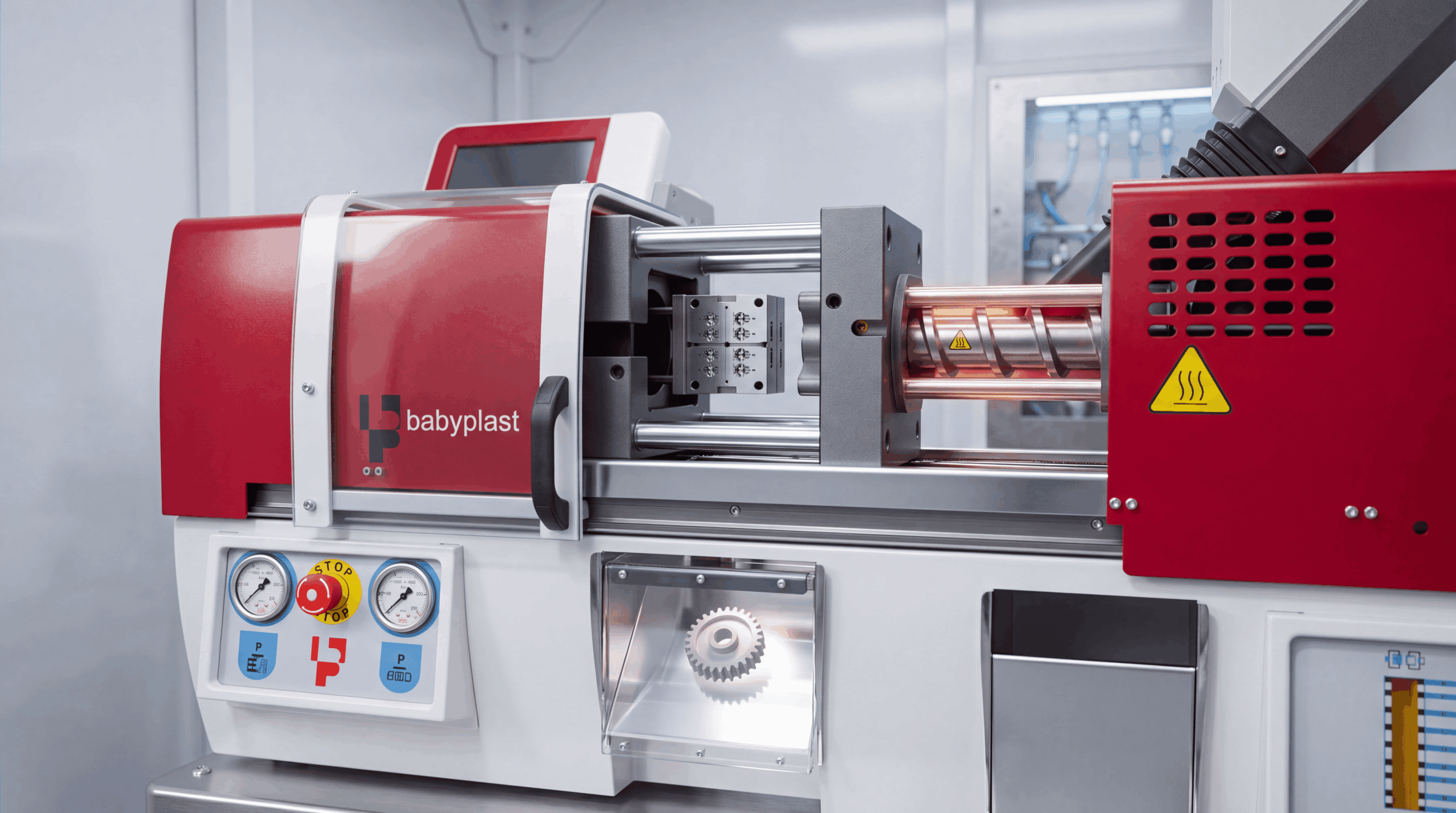
A large barrel processing a very small shot may leave material at temperature for too long or provide limited control over the delivered volume. A micro-moulding system uses an injection unit sized more closely to the application.
Clamping force and mould size
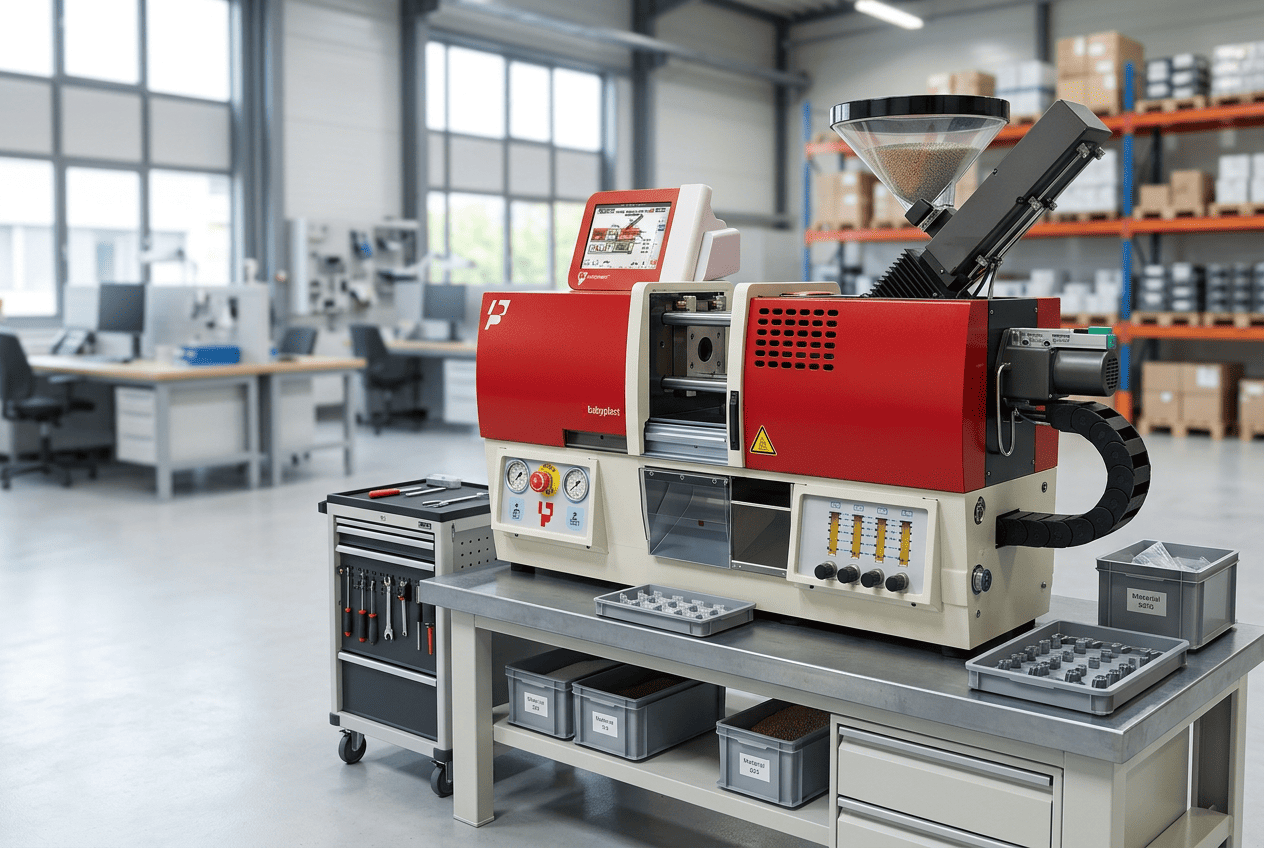
Small parts often need less clamping force and smaller moulds. Compact platens and purpose-designed tools can reduce the space, material and cost involved in the moulding cell.
Process sensitivity
At small scale, minor changes in material moisture, temperature, venting or gate condition can represent a significant proportion of the component. Stable preparation and repeatable control therefore become especially important.
Part handling
Tiny mouldings can be difficult to see, separate and handle. Collection, inspection and automation need to prevent loss, contamination and damage after ejection.
When Is Micro Moulding the Better Choice?
- The component or shot weight is very small.
- Material usage and residence time need tighter control.
- The factory needs a compact dedicated production cell.
- The part contains small, intricate or precision features.
- Insert moulding, overmoulding or specialist material processing is required.
Choosing the Process Around the Component
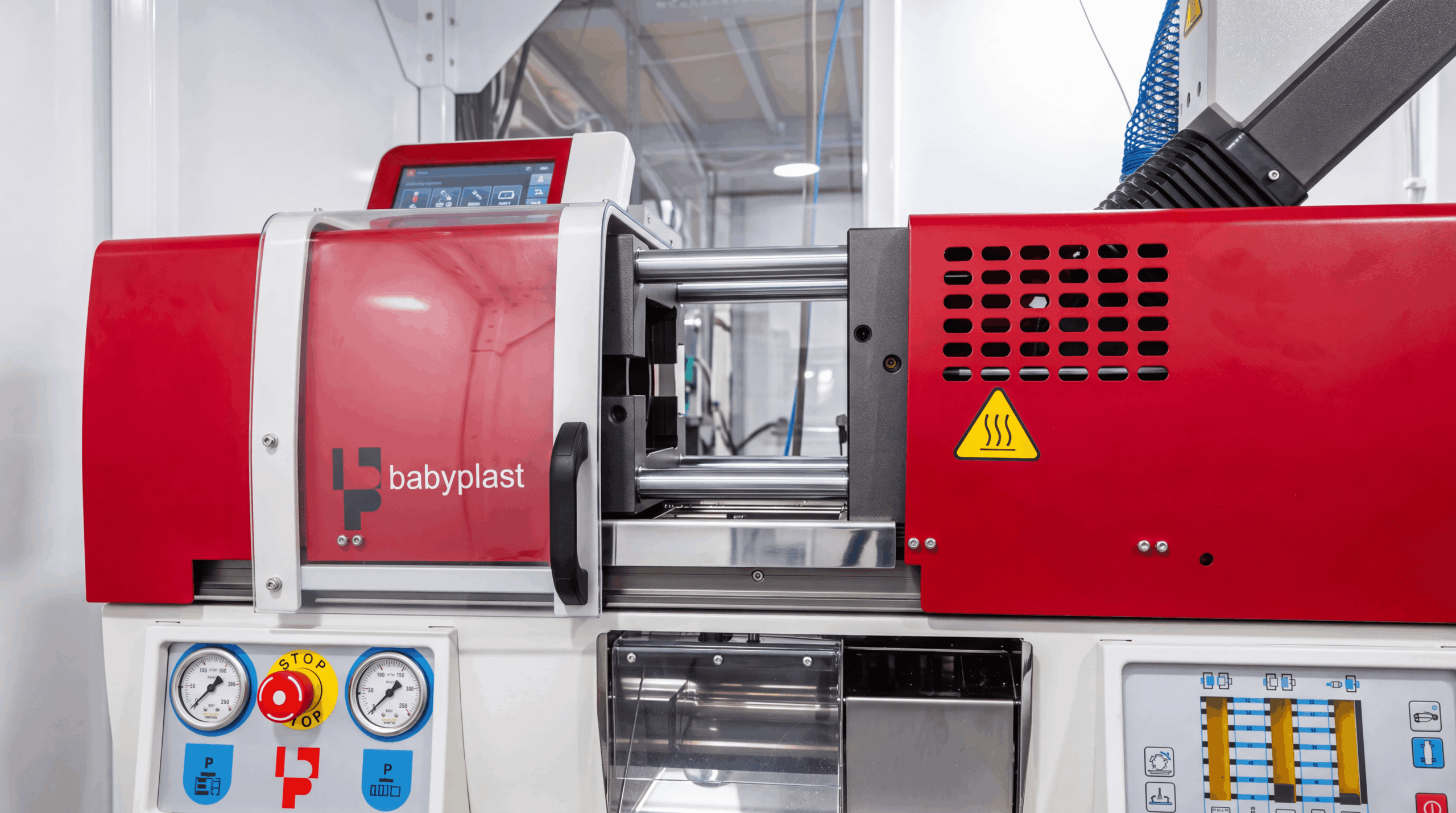
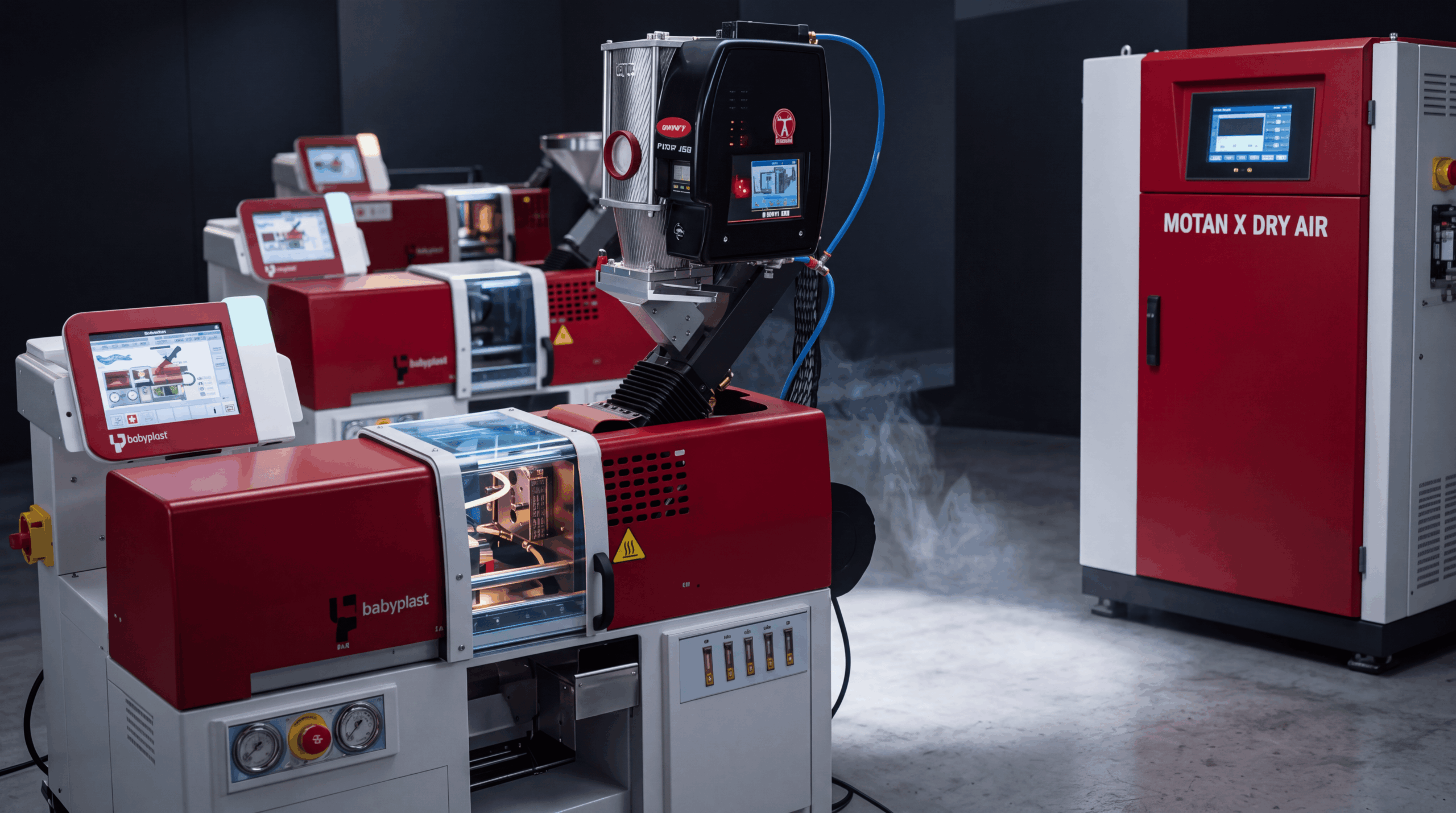
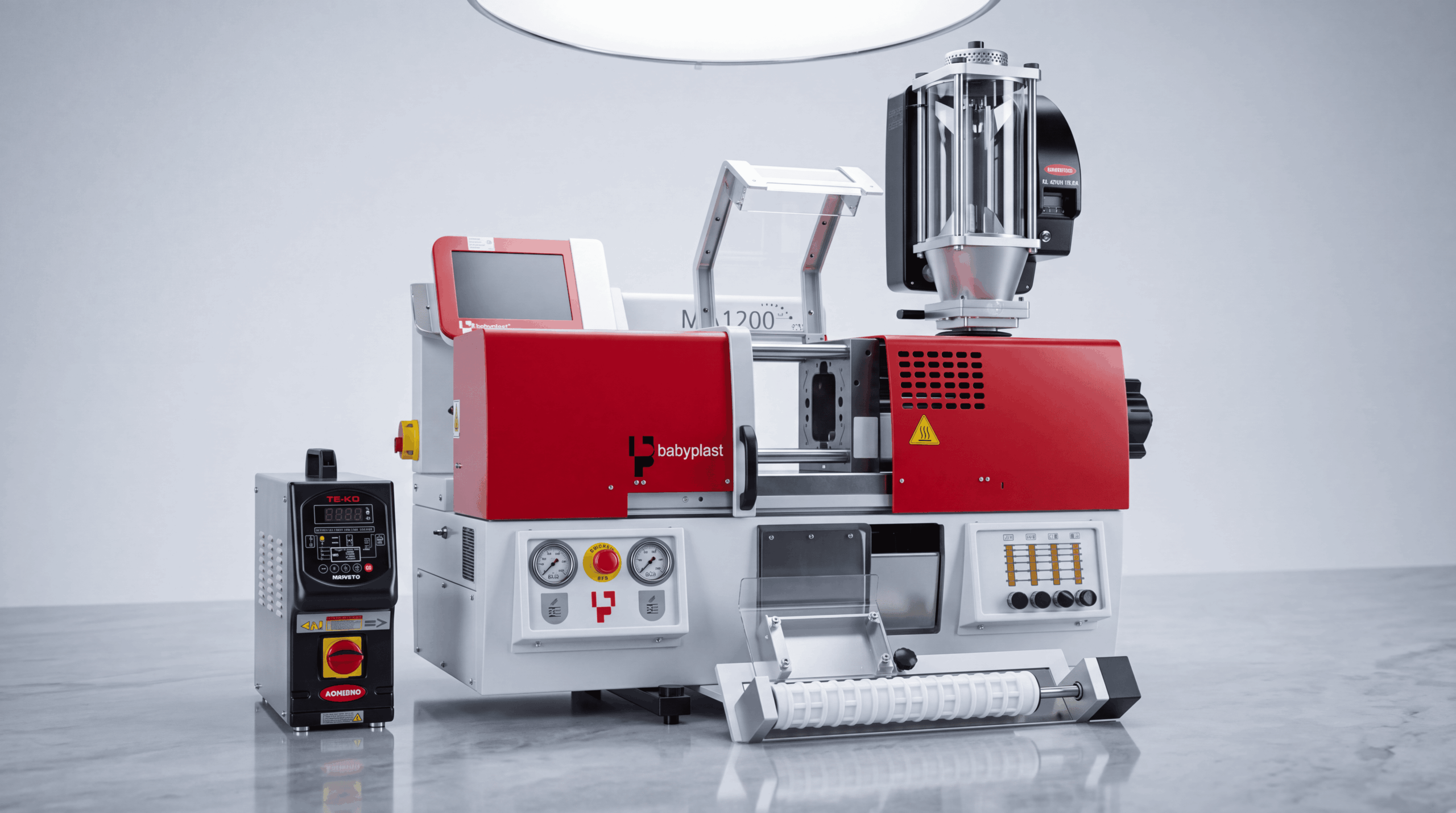
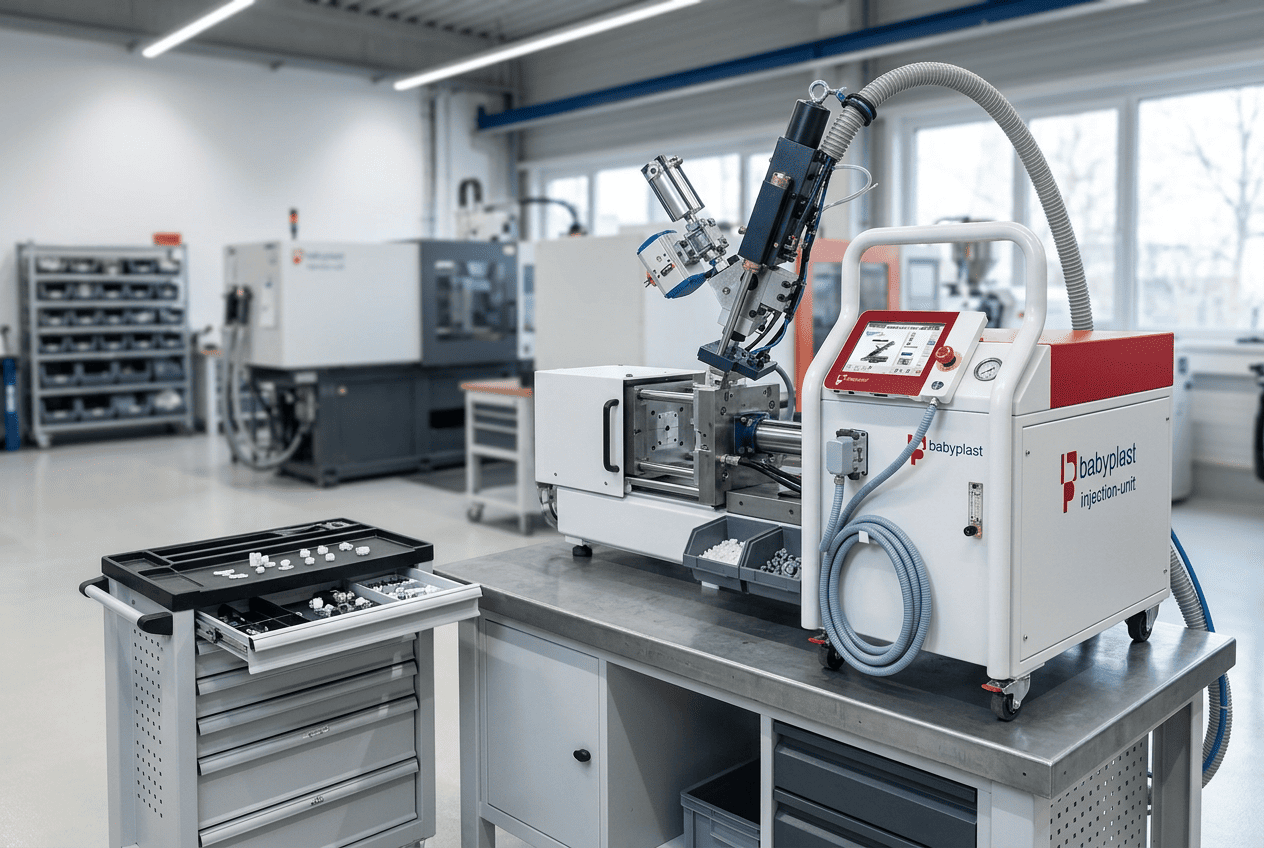
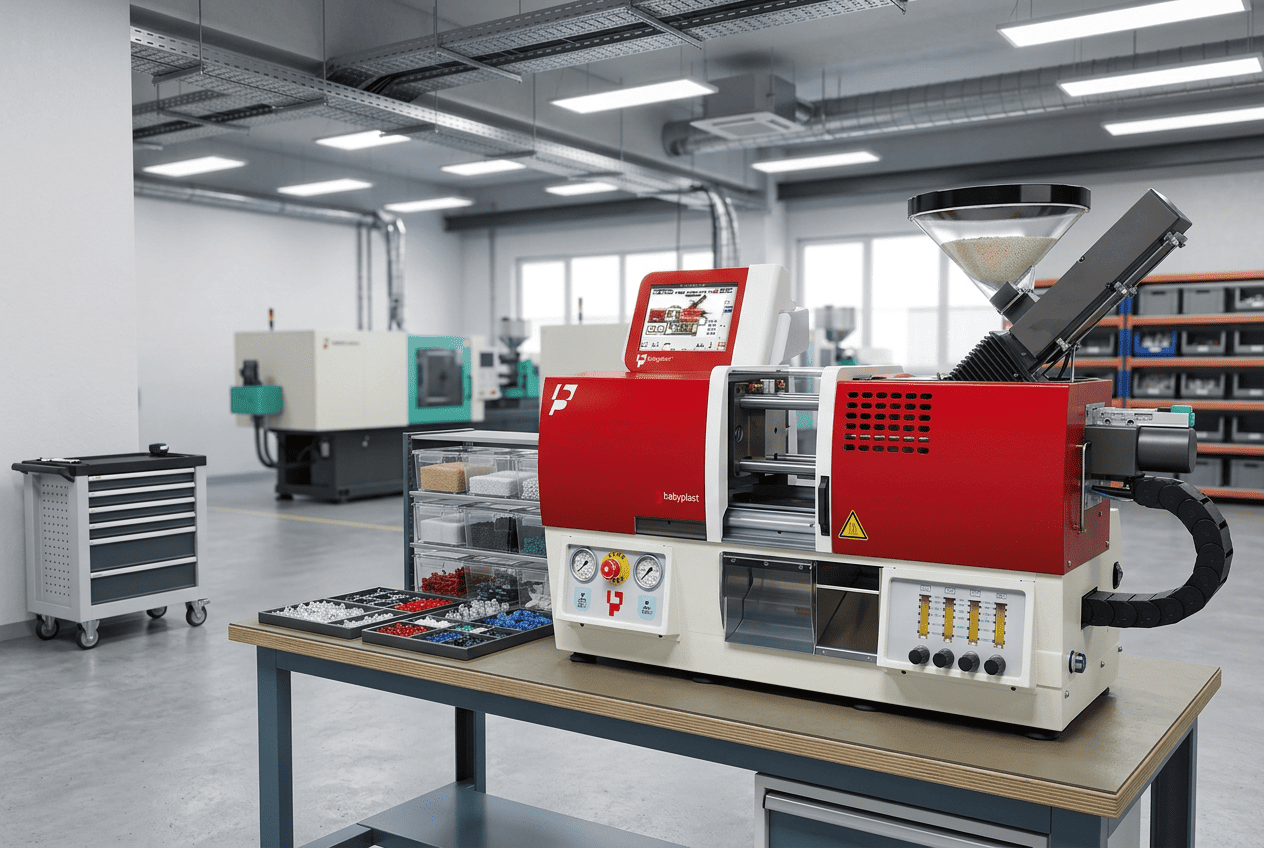
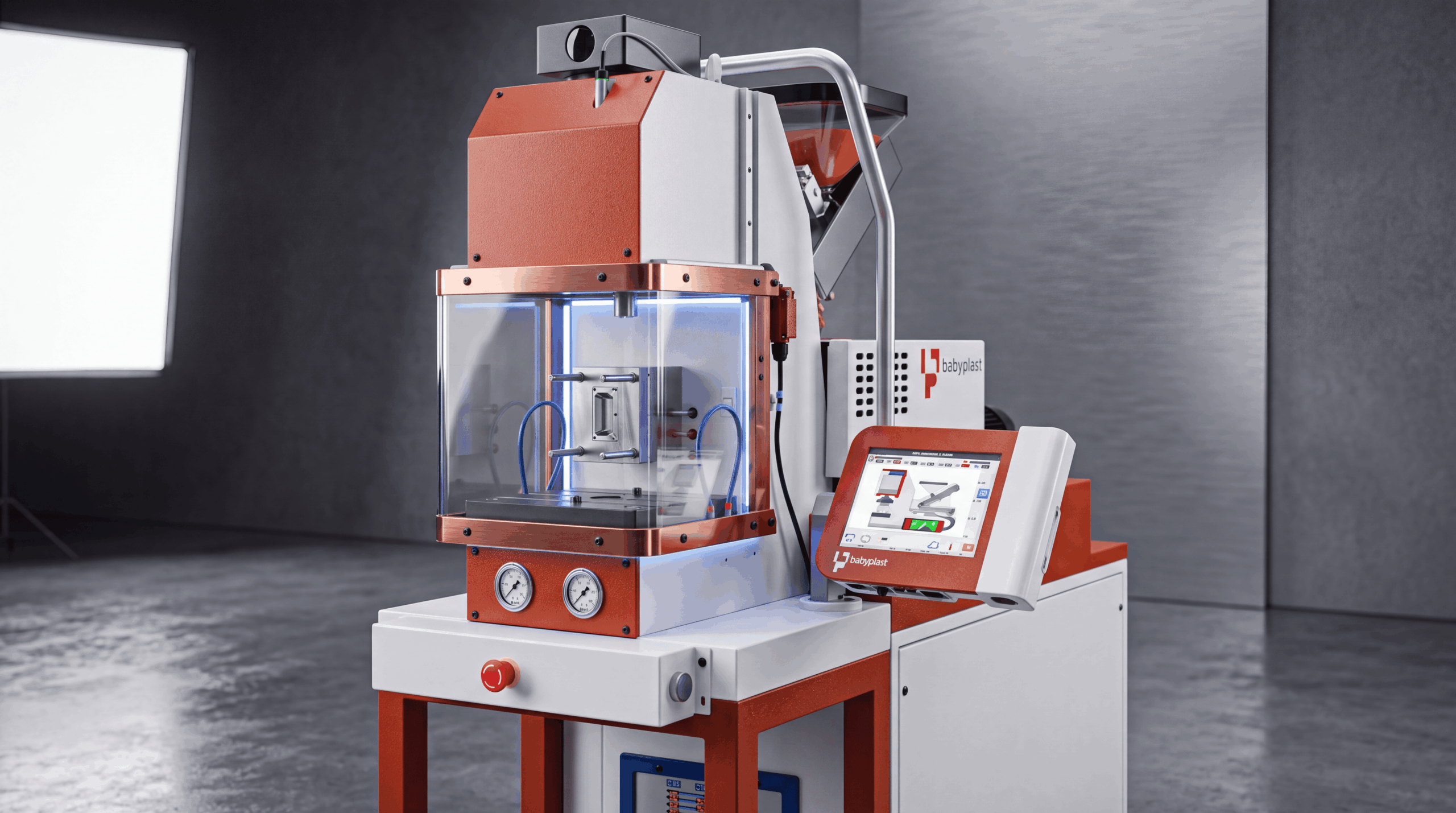
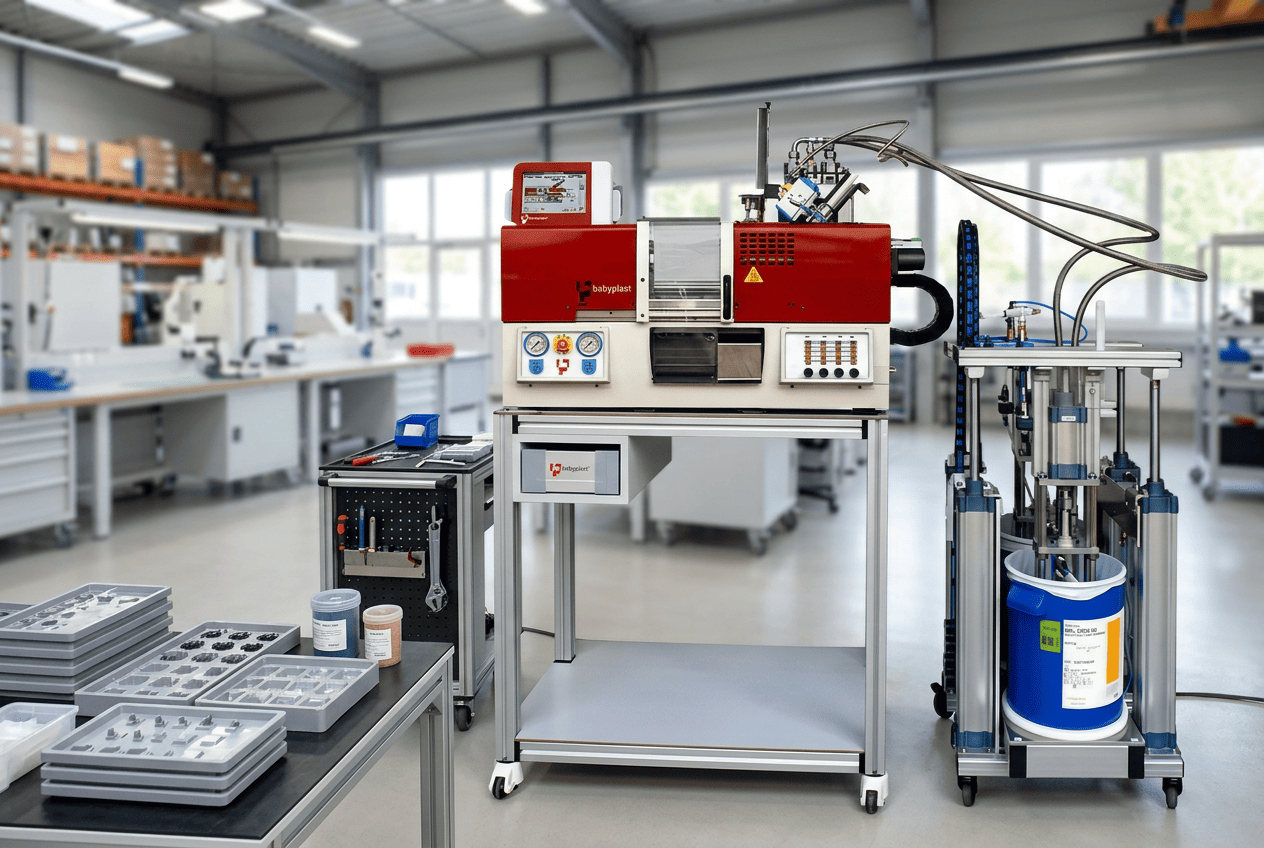
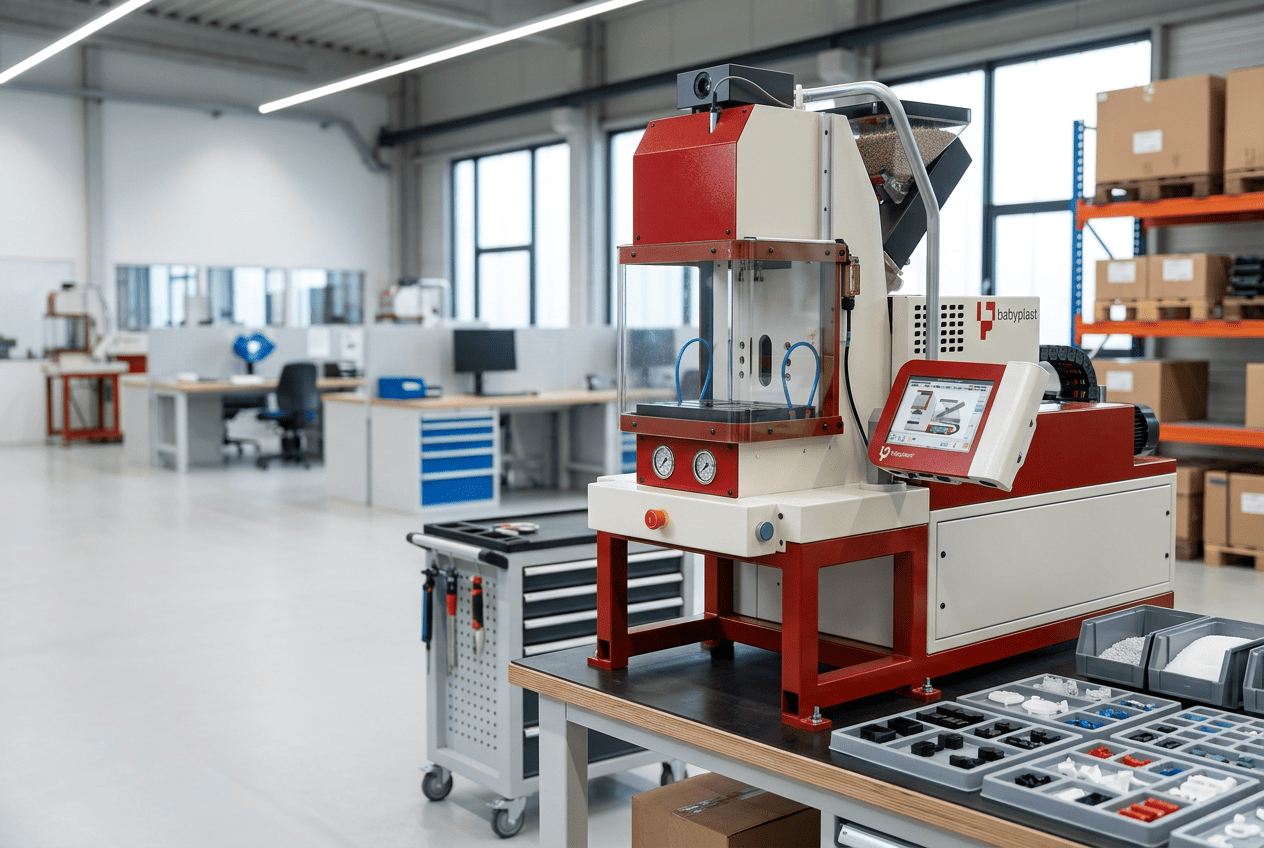
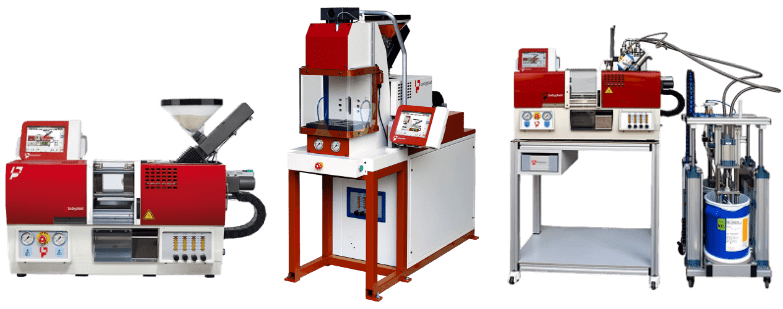
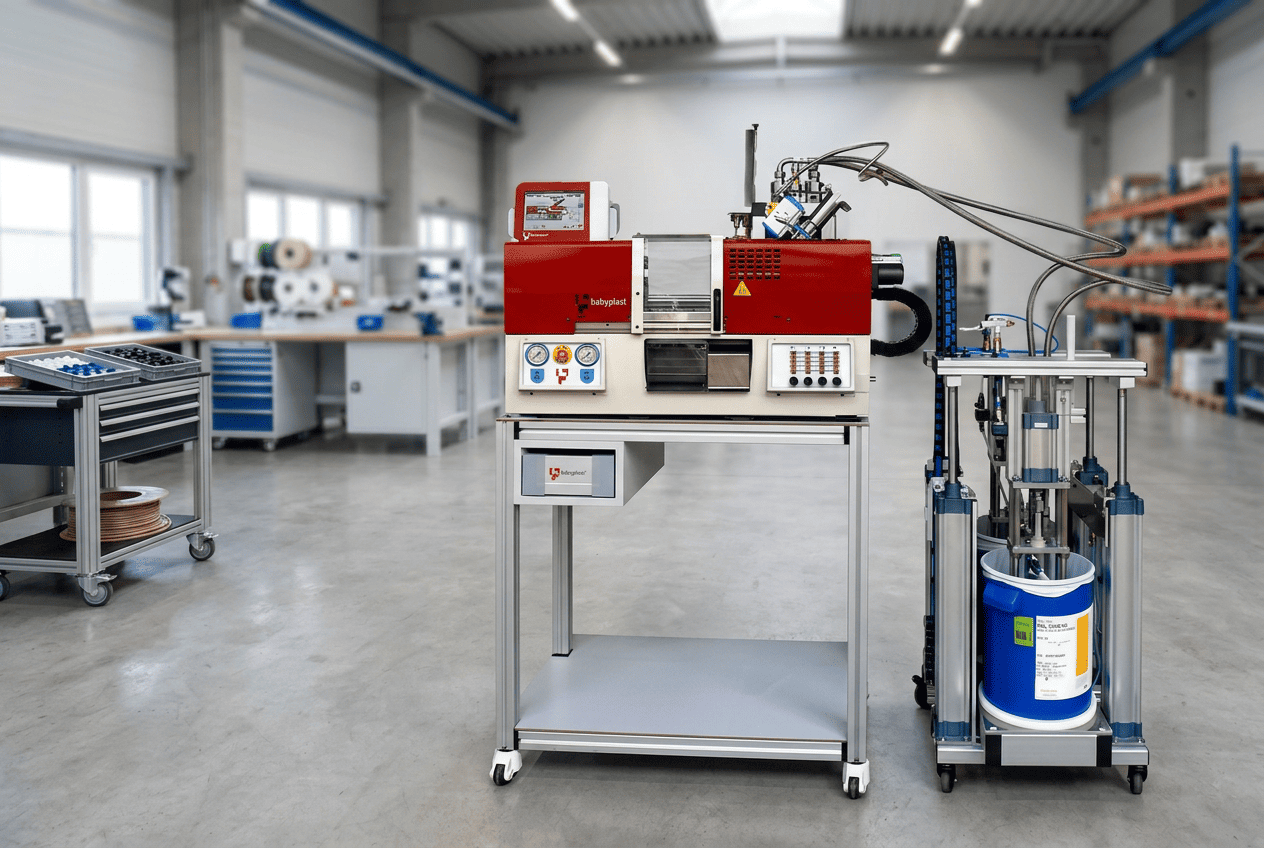
Neither approach is automatically better. The right machine must suit the component, polymer, tool, quality requirement and production volume. Babyplast UK supplies compact horizontal, vertical, secondary-shot and liquid silicone rubber micro-moulding systems. A production trial can help confirm whether micro injection moulding is the practical route for a particular part.
Explore the relevant Babyplast UK range for this application.